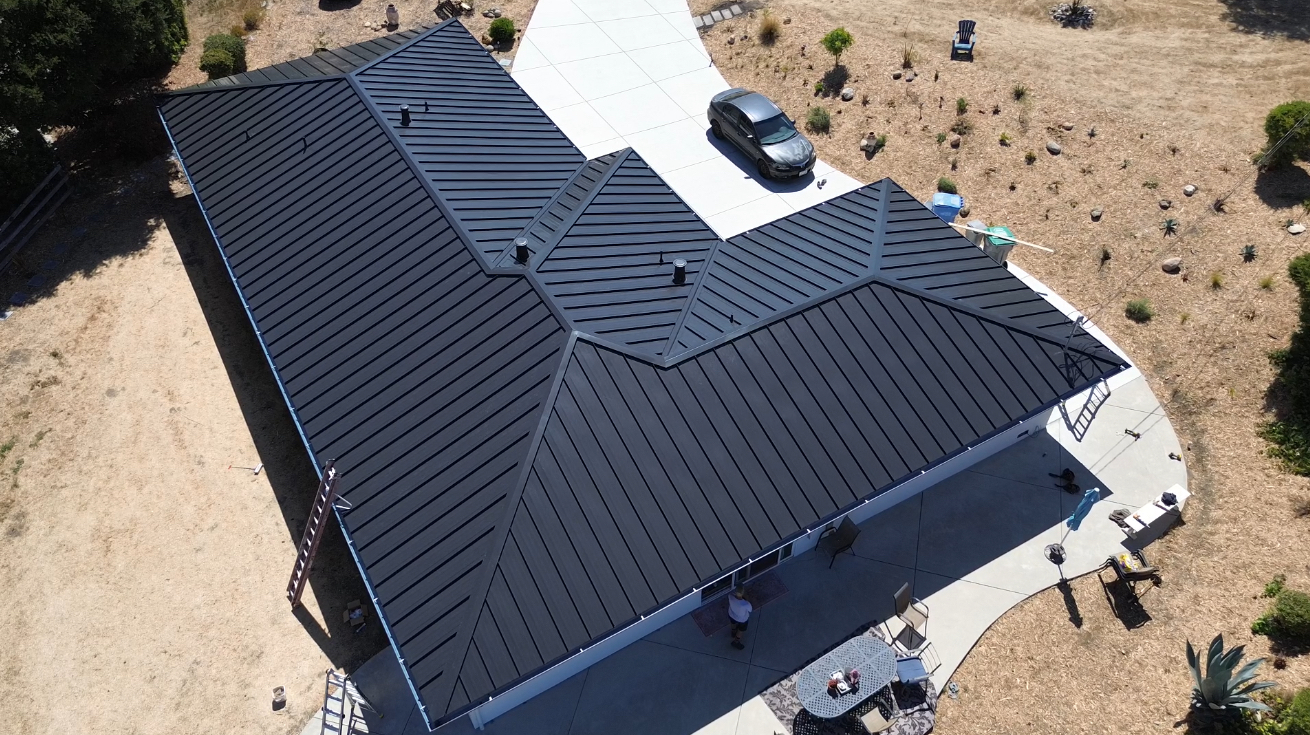
Gutter Replacement Services on the Central Coast
What you can expect
- Clear written estimates before work begins
- Seamless gutter options fabricated to fit your roofline
- Downspouts positioned to direct water away from home
- Old gutter removal plus full cleanup included
- Workmanship warranty (details provided with estimate)
- Licensed and insured
Old, sagging, or leaking gutters do not just make a mess. They can push water into places it should never go, like behind fascia boards, along siding, and toward foundations and landscaping. That is why a properly designed gutter replacement matters just as much as the materials.
RoofTop Company provides gutter replacement across the Central Coast with a focus on clean installation, correct pitch, and downspout placement that helps move water away from the home. Whether your current system is failing from age, coastal exposure, or poor design, we can replace it with a system built for winter storms and heavy runoff.
Quick ways gutter replacement helps
Replacing gutters is not only about stopping leaks. A new system can protect trim and fascia, reduce staining, and prevent water from pooling where it causes erosion or foundation problems. It can also correct design issues like undersized gutters, too few downspouts, or poor pitch that cause overflow.
- Prevent overflow that stains siding and damages trim
- Reduce pooling water around walkways, patios, and foundations
- Upgrade capacity (5-inch to 6-inch) for larger rooflines or steeper pitches
- Improve curb appeal with color-matched seamless gutters
- Fix root causes (pitch, hangers, outlets, downspouts) instead of patching leaks
What affects the cost of gutter replacement?
Gutter replacement pricing depends on your home's roofline and the system design. During your estimate, we measure the runs, check discharge locations, and look at fascia condition so you get a clear plan and a written quote.
Common factors include:
- Total linear footage of gutters
- Gutter size (5-inch vs 6-inch) and outlet capacity
- Material choice (seamless aluminum vs copper, etc.)
- Roofline complexity (corners, multiple stories, steep pitches)
- Fascia condition (repairs may be recommended before installation)
- Downspout count and placement
- Discharge plan (extensions, splash blocks, or drainage tie-ins)
- Add-ons like gutter guards
5-inch vs 6-inch gutters
Most homes do well with 5-inch gutters, but 6-inch gutters can be a better fit when you have a larger roof area, steeper roof pitch, or a history of overflow in heavy rain. If water routinely overshoots the gutter during storms, that is often a sizing and downspout capacity issue, not just debris.
We will recommend sizing after measuring your roofline and planning downspout placement, especially on long runs, valleys, and high-volume roof sections.
When to Replace Your Gutters
Many gutters can be repaired. Replacement is often the smarter move when problems are widespread, the system is near end-of-life, or the original installation was not designed to handle runoff correctly. Coastal exposure can also shorten the lifespan of certain materials, especially if fasteners, joints, or sections are already compromised.
Replace gutters when you notice:
- Cracks, pinholes, or separated seams in multiple spots
- Sagging runs or gutters pulling away from the fascia
- Frequent overflow even after cleaning
- Rust or corrosion (especially common with older steel near the coast)
- Peeling paint, stains, or rot on fascia or trim
- Water dumping near the foundation because downspouts are missing, short, or poorly placed
If you are seeing two or more of these issues, replacement is usually the most cost-effective long-term solution.
Gutter Replacement vs. Gutter Repair
If the issue is isolated (one leak, one corner, one downspout), repair can be the right call. Replacement is usually better when you are chasing multiple leaks, the hangers are failing in several places, or the gutters are simply undersized for the roof.
Replacement is often the better option when:
- you have repaired the same area more than once
- the gutters are undersized for the roof
- hangers are failing across multiple runs
- seams are aging out across the system
- you want seamless gutters to reduce leak points
If you are unsure, we will walk the roofline with you and explain what we are seeing before recommending anything.
Our Gutter Replacement Process
A good gutter system is designed, not just installed. That means paying attention to pitch, outlet placement, and how water will leave the property. Our process is built to keep the job clean and the drainage reliable.
1) Site visit plus measurements
We measure roofline runs, check pitch, evaluate fascia condition, and identify drainage trouble areas.
2) System design
We plan gutter size, outlet placement, downspout locations, and discharge routes (extensions or drains) based on roof area and runoff.
3) Remove old gutters
Old gutters, hangers, and failing components come down cleanly. We protect landscaping and leave the area tidy.
4) Prep fascia and roof edge
If fascia boards are damaged, we flag it and address it if included or approved. We also verify the roof edge and drip edge situation.
5) On-site seamless fabrication (where applicable)
For seamless aluminum, we form gutters to length on-site to reduce seams and leak points.
6) Install hangers and set pitch
We install hangers at proper spacing and set consistent pitch so water flows to outlets without pooling.
7) Downspouts and discharge
We install downspouts and recommend extensions, splash blocks, or drainage solutions to carry water away safely.
8) Flow test and walkthrough
We test drainage, check corners and outlets, and review basic maintenance.
Gutter Types We Install
Choosing the right gutter material is about durability, performance, and how the system will hold up in your environment. On the Central Coast, exposure can vary from coastal salt air to inland heat, so the best option depends on your location and your goals.
Seamless aluminum gutters
A go-to option on the Central Coast: durable, rust-resistant, and available in many colors. Seamless runs reduce leak risk.
Steel gutters (where appropriate)
A strong option for certain applications, but coastal conditions matter. We recommend coated or treated options if steel makes sense for your site.
Copper gutters (premium)
Great longevity and a distinctive look. Copper develops a natural patina over time and can be a fit for high-end or historic homes.
Profiles: K-style vs. half-round
- K-style: higher capacity and common for modern homes
- Half-round: classic look and often chosen for specific aesthetics
We will recommend the best fit based on roofline complexity, rainfall patterns, and your priorities.
Downspouts, Drainage, Fascia, and Drip Edge
Gutters only work as well as the whole drainage system. Many overflow problems come down to downspout count, placement, and discharge. If water is dumped right next to the home, it can undermine landscaping and contribute to erosion or foundation moisture.
Downspouts: We plan placement so water does not spill over the shortest corner run and soak the same spot every storm.
Discharge: Extensions and splash blocks help direct water away from foundations and landscaping.
Fascia: If gutters are installed on compromised fascia, the system can sag prematurely.
Drip edge: A properly installed drip edge helps guide water into gutters and protects roof edges.
If any repairs are recommended, we outline options clearly and separate them in your estimate.
Gutter Guards (Optional Upgrade)
Gutter guards can reduce how often you need to clean, especially around trees and wind-blown debris. The right product depends on whether you deal with leaves, pine needles, fine grit, or a mix.
Common options:
- Screen guards: good for larger debris
- Micro-mesh: better for smaller debris like needles and seeds
- Surface-tension or reverse-curve: can work well in certain conditions
No system is maintenance-free, but guards can meaningfully reduce buildup and help prevent clogs that cause overflow.
After Installation: How to Keep Gutters Performing
Even new gutters need basic upkeep to prevent clogs and overflow:
- Inspect gutters after big storms
- Clear debris seasonally (more often if you have trees nearby)
- Check downspout outlets for clogs
- Watch for overflow at corners (often a sign of debris or pitch issues)
If you add gutter guards, occasional checkups are still recommended, especially around valleys and areas with heavy debris buildup.
Service Area
We provide gutter replacement across the Central Coast, including San Luis Obispo County and Santa Barbara County. Our recommendations consider local conditions like coastal exposure, winter storms, and roofline designs common in the region.
Cities we serve: San Luis Obispo, Arroyo Grande, Atascadero, Paso Robles, Grover Beach, Morro Bay, Nipomo, Santa Maria, Santa Barbara, Goleta, and nearby areas.
Frequently Asked Questions
Questions People Ask Us (FAQ)
Related Services
Get a Free Gutter Replacement Quote
If your gutters are leaking, sagging, overflowing, or past their useful life, we will help you choose the right replacement system for your home and budget. Our team keeps the process straightforward with a clear plan, clean installation, and a written estimate before work begins.
Areas we serve
RoofTop Company works across San Luis Obispo County and Santa Barbara County. These are the cities we serve most often.