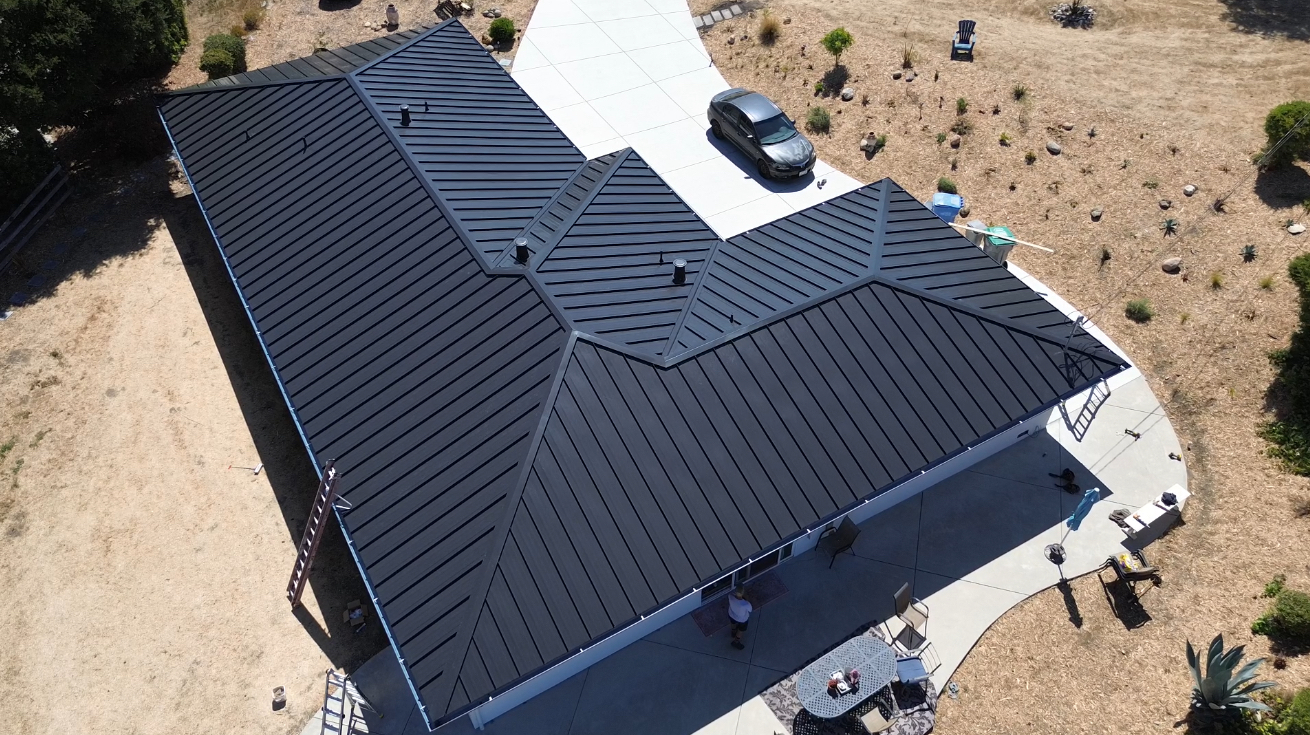
Commercial Roof Repair Central Coast
What you can expect
- Clear written scope and pricing before work begins
- Leak-focused inspections with photo documentation available
- Repairs at seams, flashings, curbs, edges, drains, and scuppers
- Practical planning for occupied buildings and tenant spaces
- Cleanup included
- Warranty details provided with your proposal
Commercial roof repair that stops the leak and fixes the weak point
Commercial roof leaks do not wait for a convenient time. A small failure at a seam, curb, or drain can turn into ceiling damage, wet inventory, and tenant complaints fast. When you need commercial roof repair on the Central Coast, the goal is simple: stop the water, fix the weak point, and make the roof predictable again.
RoofTop Company provides commercial roof repair for flat and low-slope buildings across the Central Coast, with a focus on the details that cause most leaks: seams, penetrations, edges, and drainage.
Emergency leak response
If you have an active leak, we focus on action first, then long-term reliability.
- •Protect interior: temporary waterproofing to reduce damage
- •Identify source: inspection to find the actual entry point
- •Permanent repair plan: scope, priority items, and timeline for a lasting fix
A quick local example
A property manager in Santa Barbara called because a ceiling stain appeared in a hallway after a storm. The drip was in the middle of the building, but the entry point was not. The issue was a small separation at a curb detail near rooftop equipment plus debris slowing a nearby drain. We addressed both, tested the area, and documented the repair so it was easy to track later. Commercial leaks often travel. Fixing the right spot is what matters.
What Commercial Roof Repair Usually Means
Commercial roof repair is not just "patch the hole." A real repair is:
- identifying where water is entering
- correcting the failed detail (seam, curb, flashing, termination, drain)
- checking nearby stress points so the leak does not simply move
- confirming drainage so water is not sitting where it stresses the system
On flat roofs, the visible drip inside rarely tells you the whole story. Water can travel along the roof surface, under membranes, around curbs, and along edges before it shows up indoors.
Common causes of commercial roof leaks
Most commercial roof leaks come from a short list of problem areas:
- seam issues on single-ply systems (TPO, PVC, and similar)
- flashing failures at penetrations (HVAC, vents, conduit, skylights)
- edge and termination problems where wind and water stress the perimeter
- drain and scupper restrictions that cause ponding water
- punctures from roof traffic, tools, or debris
- aging sealants that were never refreshed
- improper previous repairs that did not address the root issue
The fix depends on the cause. That is why inspection matters.
The repair categories we handle most often
We tailor repairs to the roof type and the failure point. These are the most common repair types on commercial buildings.
Seam repair and reinforcement
On low-slope roofs, seams are a common failure area when stressed by ponding zones, movement, and age. Repairs focus on restoring the detail and reinforcing the zone so it performs longer.
Flashing repair at penetrations and curbs
Penetrations are constant risk zones. We repair and reinforce flashing at HVAC curbs, vents, skylights, pipe penetrations, and transitions so the roof stays watertight where the system changes shape.
Edge and termination repairs
Roof edges take wind load and water stress. Loose terminations and tired edge details can allow water migration. We correct termination details and secure the perimeter so it stays tight.
Puncture and impact repairs
Service traffic and rooftop work can create punctures that are easy to miss until rain hits. We patch punctures correctly and review nearby areas that often get damaged in the same way.
Drain and scupper related repairs
Many "roof leaks" start as drainage failures. We inspect drain bowls, scuppers, and overflow paths and correct issues that cause water to sit too long or back up during storms.
Storm damage and emergency mitigation
When storms hit, sometimes the first step is containment. Temporary waterproofing and stabilization can reduce interior damage while a permanent repair plan is scheduled.
What to Expect During a Commercial Roof Repair Visit
We keep repair work organized because most commercial properties are occupied and active.
Step 1: Evaluate symptoms and roof conditions
We ask what you are seeing inside, then inspect the roof where leaks commonly originate. We do not rely on the interior drip location alone.
Step 2: Identify the most likely entry point
We review seams, curbs, penetrations, edges, and drainage. If multiple risk points are found, we explain what is urgent vs what can be monitored.
Step 3: Provide a clear repair scope
You get a written scope that explains what we are repairing and why. If additional issues are discovered, we separate them clearly so you can decide how to proceed.
Step 4: Perform the repair and verify
We complete the repair and confirm details are secure and sealed. We also check nearby conditions that commonly create follow-up leaks.
Step 5: Document the work
Photo documentation is available so property managers can track repairs over time and keep records for ownership and maintenance planning.
Flat Roof Repair and Water Movement
On low-slope roofs, water movement is part of the system. When drainage is restricted, the roof details get stressed.
We pay special attention to:
- low spots that pond repeatedly
- drain bowls and strainers
- scupper openings and overflow paths
- discharge routing that contributes to backups
- debris sources that repeatedly clog the same locations
If the repair plan does not address water movement, the leak often comes back.
Repairs for TPO, PVC, and other flat roof systems
We work on common commercial roof systems. Repair approach depends on the system and condition.
This page stays focused on repair so it does not compete with system pages.
When repair is the right call
Commercial roof repair is usually a smart move when:
- the issue is localized
- the roof is otherwise performing reliably
- the problem is tied to a specific detail (curb, seam, edge, drain)
- you want to stabilize the roof and reduce emergency calls
A good repair can extend service life and reduce downtime, especially when paired with periodic maintenance.
When repair is not enough
Sometimes repairs turn into repeat visits because the roof system is beyond "spot fixes."
If you are dealing with recurring leaks in new locations, widespread soft spots, or constant ponding zones, it may be time to plan the next step.
We keep this section short so the repair page does not compete with replacement pages.
Service Area
We provide commercial roof repair across the Central Coast, including San Luis Obispo County and Santa Barbara County.
Cities we serve include: San Luis Obispo, Arroyo Grande, Atascadero, Paso Robles, Santa Maria, Santa Barbara, Goleta, and nearby areas.
Frequently Asked Questions
Questions People Ask Us (FAQ)
Related Services
Get a Free Commercial Roof Repair Quote
If your commercial roof is leaking or you suspect a problem after a storm, we can inspect the roof, identify the likely entry point, and provide a clear repair plan.
Areas we serve
RoofTop Company works across San Luis Obispo County and Santa Barbara County. These are the cities we serve most often.